Want to increase brand awareness? You first have to build a brand people actually want to remember. It all comes down to truly getting your audience, carving out a unique space in the market, and being relentlessly consistent in how you communicate your value.
This is the strategic groundwork that makes every marketing dollar you spend later actually count.
Building a Brand People Remember
Before you even think about launching social campaigns or writing a single blog post, you have to build a brand worth knowing. Too many companies skip this part, but it's the most critical step for creating sustainable brand awareness. Without a solid identity, your marketing will feel random and completely miss the mark.
Think of your brand like a person. It needs a personality, a voice, a clear reason for being. This goes way beyond a cool logo and a color palette; it’s about the core message you send and the promises you keep.
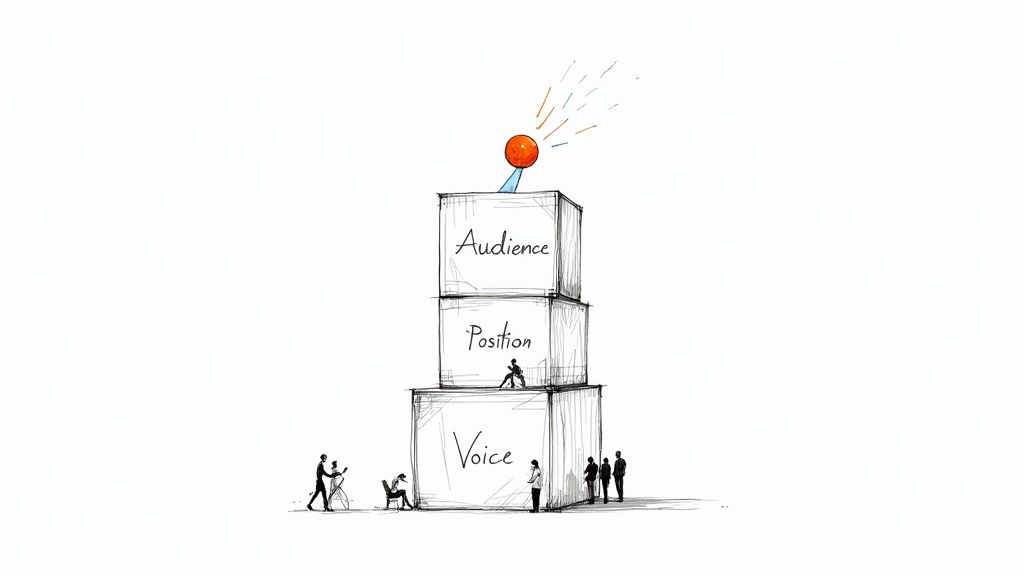
Uncover Your Audience’s True Motivations
First things first, you have to go deeper than surface-level demographics. Knowing your ideal customer is a B2B SaaS manager in fintech is a start, but it’s not nearly enough. You need to get inside their world.
What are their biggest frustrations at work? What does a "win" look like for them? Where do they go for advice, and who do they actually trust?
Solid audience research is how you get these answers. Here are a few practical ways I’ve seen this done well:
- Customer Interviews: Actually talk to your best customers (and even some who left). Ask open-ended questions about their day-to-day challenges and what triggered them to look for a solution like yours in the first place.
- Community Lurking: Become a fly on the wall in the online communities where your audience lives. I’m talking about niche subreddits, private Slack groups, or industry-specific LinkedIn groups. Pay attention to the language they use and the problems that keep coming up.
- Quick Surveys: Use simple tools like Typeform or SurveyMonkey to gather hard data on their biggest pain points and priorities.
This isn’t a one-and-done task. It's a continuous loop of listening that keeps your brand perfectly aligned with the people you’re here to help.
Craft a Unique Position and Message
Once you really know your audience, you can figure out where you fit in the market. A key part of this is defining your value proposition—what makes you the obvious choice?
Your positioning statement should be a clear, concise answer to the question: "Why should a customer choose us over anyone else?" This isn't about listing features; it's about the specific outcome or transformation you deliver.
From that solid positioning, you can build a core message that actually connects with your audience on an emotional level. This message needs to be woven into everything—your website copy, your social posts, your sales decks. Everything.
Consistency is king. Research shows that brands with a consistent presentation see their revenue increase by up to 33%. It makes sense—it takes an average of 5-7 impressions for someone to even remember a brand. Uniformity builds the trust and recognition you need to cut through the noise.
The best brands aren't just seen; they're felt. A powerful brand message connects with a customer's aspirations and makes them feel understood.
Define Your Authentic Brand Voice
Finally, your brand needs a consistent voice. Are you the professional, trusted authority? Or are you the witty, informal friend? There’s no single right answer, but the one you choose has to be deliberate and feel genuine to both your company and your audience.
Document this voice in a simple style guide and make sure everyone on your team uses it. A consistent voice makes your brand feel familiar and reliable, building the kind of trust that fuels word-of-mouth growth.
When people trust you, they talk about you. It’s that simple. If you want to dig deeper into this, we have a whole guide on what is word-of-mouth marketing. Nailing this foundational work ensures your brand doesn’t just get noticed—it gets remembered for the right reasons.
Finding Where Your Audience Actually Listens
So, you've nailed down your brand's identity. The next big hurdle? Making sure the right people actually hear what you have to say.
It’s tempting to blast your message across every social media platform imaginable, hoping something resonates. But that "spray and pray" approach is a classic rookie mistake. It’s a fast way to burn through your budget, dilute your message, and create a lot of noise without making any real impact.
A much smarter strategy is to go where your audience is already having real conversations. Think of it as finding the digital version of their favorite coffee shop or the industry conference they never miss—the places they turn to for genuine advice and connection.
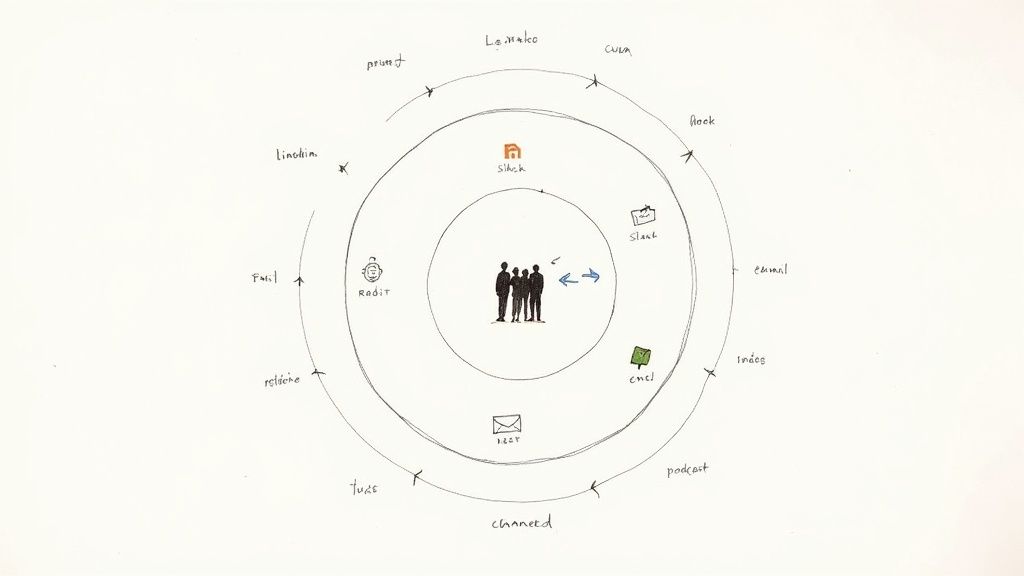
Go Beyond The Obvious Channels
For anyone in B2B or SaaS, LinkedIn is usually the first stop. And for good reason—it’s where professionals live online. But it's also incredibly crowded. Your best customers are probably hanging out in more specialized, high-intent communities where they feel comfortable asking the questions they wouldn't post on their public profile.
Get granular and look for these digital watering holes:
- Niche Subreddits: Communities like r/sysadmin, r/sales, or r/productmanagement are absolute goldmines. People here are asking for specific tool recommendations, troubleshooting tough problems, and sharing completely unfiltered opinions.
- Private Slack & Discord Groups: These are often highly-curated, invite-only spaces for professionals in a specific role. Getting in and contributing value can build an insane amount of trust.
- Industry Forums: They might feel a bit old-school, but for many technical or legacy industries, these forums are still the most active hubs for expert conversation.
The trick is to listen before you speak. Seriously, just lurk for a while. Get a feel for the culture, understand the inside jokes, and take note of the problems that keep coming up. You’re not there to barge in with a sales pitch; you're there to become a helpful, familiar face.
Choosing Your Battlefield Wisely
You can't be everywhere at once, especially with a lean team. The brands that win don't just pick a channel—they commit to dominating one or two. That kind of focus lets you build deep relationships and become the go-to expert in that specific space.
When you're deciding where to plant your flag, ask yourself three simple questions:
- Where do our ideal customers ask for help? Look for the actual questions related to the problems your product solves.
- Does the platform's vibe match our brand's voice? A highly technical product might kill it on Reddit, while a more relationship-driven brand could do better on LinkedIn.
- Can we realistically add value here? Do you have the expertise and, just as importantly, the time to contribute without just shilling your product?
A great brand awareness strategy isn't about being present everywhere; it's about being profoundly useful somewhere. Choose a channel where you can be the most helpful person in the room.
For a real-world example, look at how the project management tool ClickUp grew. Early on, they were hyper-active in productivity-focused subreddits and Facebook groups. They weren't just dropping links; they were answering detailed questions about workflows and team management. They established themselves as experts first, which built a foundation of trust that paid off big time.
Aligning Channels With Business Goals
Finally, your channel strategy has to connect back to your bigger business goals. Are you trying to generate leads? Build thought leadership? Get raw product feedback? Each goal points to a different set of channels.
Here’s a simple way to map it out:
| Primary Goal | Potential Channels | Why It Works |
|---|---|---|
| Lead Generation | LinkedIn, Targeted Webinars | High professional intent and direct access to decision-makers. |
| Thought Leadership | Industry Podcasts, X (Twitter) | Establishes authority and reaches engaged, niche audiences. |
| Community Building | Slack, Reddit, Discord | Fosters direct interaction and authentic user feedback. |
This focused approach is the cornerstone of any effective B2B social media strategy. It ensures your day-to-day efforts are actually moving the needle on what matters. The idea is to create a flywheel where your deep engagement on one channel builds a reputation that pulls people into your world. Choose wisely, commit fully, and you’ll turn your channel strategy from a checklist item into a powerful engine for brand growth.
Executing Proven Brand Awareness Plays
Strategy is great, but execution is where the real work of building a brand happens. This is the part where we move from planning to doing. The key is to have a playbook of proven, repeatable tactics that your team can run consistently, turning those high-level goals into real-world results.
Think of these not as one-off campaigns, but as systematic ways to embed your brand into the daily conversations and workflows of your ideal customers. Let's dig into some battle-tested plays you can adapt and deploy right away.
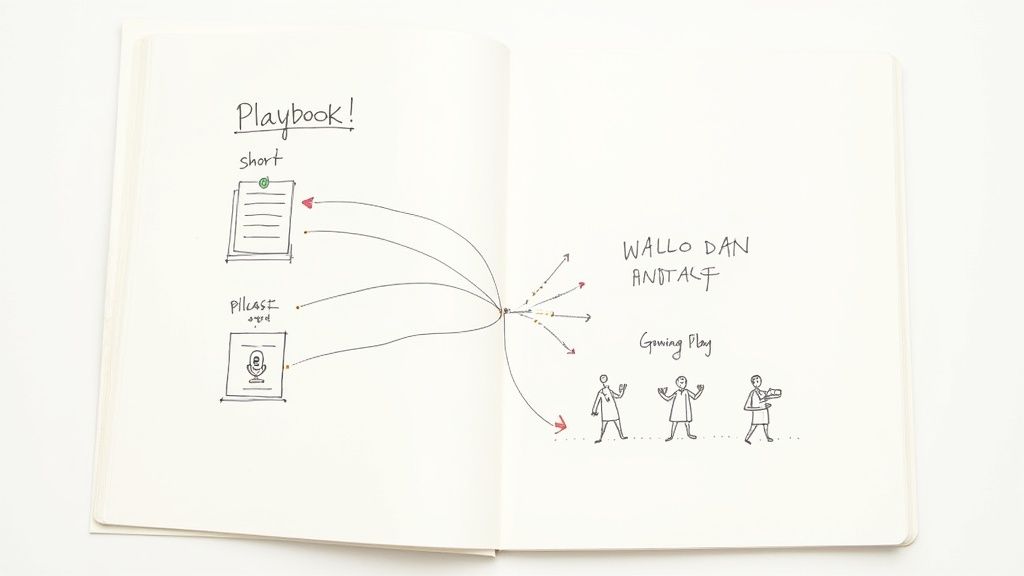
The Community Engagement Playbook
Want to build trust fast? Stop selling and start helping. This playbook is all about becoming a known, valuable resource in the communities where your audience already hangs out.
The goal isn't to just drop links to your product—that's a quick way to get ignored or banned. The real art is providing such good advice that people get curious and look you up themselves. This is exactly how brands like Replymer have managed to turn everyday online discussions into a powerful engine for compounding demand.
Here’s a simple process to get this going:
- Find the Right Conversations: Use keyword monitoring or just good old-fashioned manual searching on platforms like Reddit, X (formerly Twitter), and LinkedIn. Look for people asking questions with phrases like "any recommendations for," "how do I solve," or "best tool for."
- Add Real Value First: Jump in and answer the person's question as thoroughly as you can. Share your direct experience, offer a step-by-step solution, or point them to a genuinely helpful resource (even if it isn't yours). The mission here is to be helpful, period.
- Suggest Your Solution (When It Makes Sense): After you’ve provided value, and only if it’s a genuinely good fit, you can mention your product. Frame it as another option they might want to consider, explaining exactly how it solves their specific problem.
This value-first approach flips the script. Instead of interrupting someone's day with an ad, you're joining a conversation with a solution. That's how you build authentic brand awareness and trust from the ground up.
The Pillar Content Playbook
A single, exceptional piece of content can generate more brand awareness than a hundred mediocre blog posts combined. The pillar content playbook is about creating the definitive resource on a core topic that your audience absolutely needs to understand.
This isn’t just another blog post; it's an asset. Think of a comprehensive guide, an original research report, or a free tool that becomes the go-to resource in your industry. Ahrefs' blog is a masterclass in this, with incredibly detailed guides that rank for thousands of keywords and cement their status as the authority on SEO.
- Pick a High-Impact Topic: Find a broad subject with significant search demand that’s central to the problems your product solves.
- Go Deeper Than Anyone Else: Your pillar page needs to be the most thorough resource on the topic, period. Cover every angle, answer every adjacent question, and bring unique insights to the table.
- Promote It Relentlessly: Hitting "publish" is only half the battle. Now you have to promote it everywhere: in communities, to influencers, and as the centerpiece for smaller, related content. As part of your execution, consider exploring effective link building strategies to boost your content's authority and reach.
The Guest Appearance Playbook
Why build an audience from scratch when you can borrow one? The guest appearance playbook is all about strategically placing your experts on podcasts, webinars, and virtual events that your ideal customers already trust.
Honestly, this is one of the most efficient ways to get your brand noticed. A single podcast interview can put your name in front of thousands of highly engaged people in your exact target market, instantly building credibility by association.
For B2B and SaaS brands, this tactic is a goldmine. It works hand-in-hand with social media, which is a massive driver of discovery for younger professionals. In fact, research predicts that in 2025, a staggering 71% of brand discovery among Gen Z and Millennials will happen through social media. This just highlights how important it is to have an active presence where you can amplify your guest appearances and interact directly. You can find the full details in these branding statistics from Blacksmith Agency.
Ready to get started?
- Build a Target List: Identify 20-30 podcasts or webinar series that your ideal customers listen to. Look for shows where your expertise is a natural fit.
- Craft a Personalized Pitch: Ditch the generic template. Listen to a few episodes, reference specific things you liked in your outreach, and pitch 2-3 specific topic ideas that would bring a ton of value to their audience.
- Deliver Actionable Insights: Once you land a spot, your job is to teach, not to sell. Share your best, most actionable advice freely. A quick mention of your company is all you need—the value you provide will do the rest of the work for you.
Measuring the Metrics That Matter
Brand awareness can feel a bit... fuzzy. How do you actually prove that your community engagement, podcast interviews, and content blitzes are moving the needle?
It’s a fair question. While you can't always draw a straight line from a single tweet to a new enterprise deal, you can absolutely track clear signals that show your brand's footprint is expanding.
We're not talking about building some ridiculously complex attribution model that takes a data scientist to decipher. This is about zeroing in on a handful of key performance indicators (KPIs) that give you a reliable, data-backed view of your progress. Tracking the right things lets you double down on what’s working, celebrate wins, and show your team (and your boss) that this stuff actually works.
I like to split measurement into two camps: leading and lagging indicators. Leading indicators are the real-time feedback on your activities. Lagging indicators are the downstream business results that follow. You need both.
Leading Indicators: Is Your Brand Gaining Traction?
Leading indicators are your early warning system. They tell you if you’re actually capturing attention and becoming part of the industry conversation. These are the metrics to watch weekly or monthly to see the immediate pulse of your awareness efforts.
For most B2B and SaaS brands, these are the big ones:
- Social Media Share of Voice (SoV): This is a huge one. It measures how much of the conversation around your key topics your brand owns compared to your competitors. It's a direct reflection of your authority. If you need a deep dive, here's how to calculate share of voice with the right tools.
- Media & Community Mentions: Keep an eye out for every time your brand is mentioned without being tagged. I’m talking about shout-outs in articles, podcasts, or community threads on Reddit and LinkedIn. These unlinked mentions are gold—a powerful sign of pure, organic awareness.
- Engagement Rate: Follower counts are a vanity metric. What really matters is whether people care. A high engagement rate (likes, comments, shares) proves your message is actually connecting with your audience, not just floating by on their feed.
A rising share of voice is one of the truest signs that your brand awareness strategy is working. It means you're not just shouting into the void; you're actively shaping the conversation in your market.
These metrics give you instant feedback. Did you see a spike in mentions after that podcast interview? Is your SoV steadily climbing since you started engaging in those niche communities? That’s how you know you're on the right track.
Lagging Indicators: Proving the Business Impact
Lagging indicators are the proof that your growing brand awareness is turning into real business outcomes. These numbers take longer to move, but they’re what ultimately demonstrate the ROI of your work.
The two most powerful lagging indicators are tied to how people find you once they know who you are: direct traffic and branded search volume.
Think about it. As more people learn about your brand, you'll see more of them typing your URL straight into their browser or searching your company name on Google. That’s the endgame—they already know and trust you enough to seek you out directly. This isn't just theory; you can dig into the impact of direct traffic on HubSpot's blog to see the data for yourself.
Here’s how to track these using tools you probably already have:
- Direct Website Traffic: In Google Analytics, this is the segment of users who land on your site by typing your URL directly. A steady upward trend here is a fantastic signal of brand recall.
- Branded Search Volume: Use Google Search Console to watch the impressions and clicks for searches that include your brand name. As awareness grows, so will the number of people searching for you by name.
By keeping an eye on both leading and lagging indicators, you get the full picture. The leading metrics give you the agility to adjust your tactics in real-time, while the lagging metrics deliver the definitive proof that your work is hitting the bottom line.
Scaling Your Brand Awareness Efforts
https://www.youtube.com/embed/2-9GpXyduRE
Building brand awareness is a long game, a marathon. So many SaaS companies stumble because they try to do everything at once. They launch on five social platforms, start a podcast, and spin up a PR campaign all in the first month. It’s a classic recipe for burnout and, worse, a lot of mediocre results.
A far better approach is to scale your efforts methodically. When you break the journey into distinct phases, you can build real momentum, lock in some early wins, and grow your brand’s presence without totally overwhelming your team. This roadmap gives you a repeatable process for turning small, consistent actions into significant brand recognition over time.
Phase 1: The Foundation (Months 1-3)
The first 90 days are all about laser focus. The goal isn't to be everywhere; it's to be undeniably great in one core area. If you spread your resources too thin right out of the gate, you'll never gain real traction anywhere.
Your entire mission here is to master one primary channel. This is where you'll build your initial audience, get real-world feedback on your messaging, and develop a system you can actually stick to.
Here’s what that looks like in practice:
- Goal: Establish a strong, initial foothold and create a predictable engine for engagement.
- Recommended Activities:
- Channel Mastery: Pick one platform where your audience genuinely hangs out—maybe a niche subreddit, LinkedIn, or X—and go all-in.
- Consistent Content: Show up with high-value content or thoughtful replies on that channel daily or at least several times a week.
- Community Engagement: Spend time answering questions and joining conversations without expecting anything in return. Just be helpful.
- Key Metrics to Track:
- Engagement Rate: Are people actually interacting with what you're posting?
- Community Mentions: Are others starting to reference your brand or your insights organically?
- Follower/Member Growth: Is your core audience getting bigger?
By the end of this phase, you should have a solid playbook for what works on your chosen channel. That foundation gives you the confidence and the process you need to start expanding your reach.
Phase 2: The Expansion (Months 4-9)
With a solid base established, it's time to start layering on new initiatives. The idea here is to leverage your early success to get in front of new, relevant audiences. This is where you strategically introduce activities with broader reach, like public relations and partnerships.
You’re essentially moving from building a community to broadcasting your expertise.
This flow shows how key brand awareness metrics build on each other, starting with those initial mentions and eventually leading to high-intent branded search traffic.
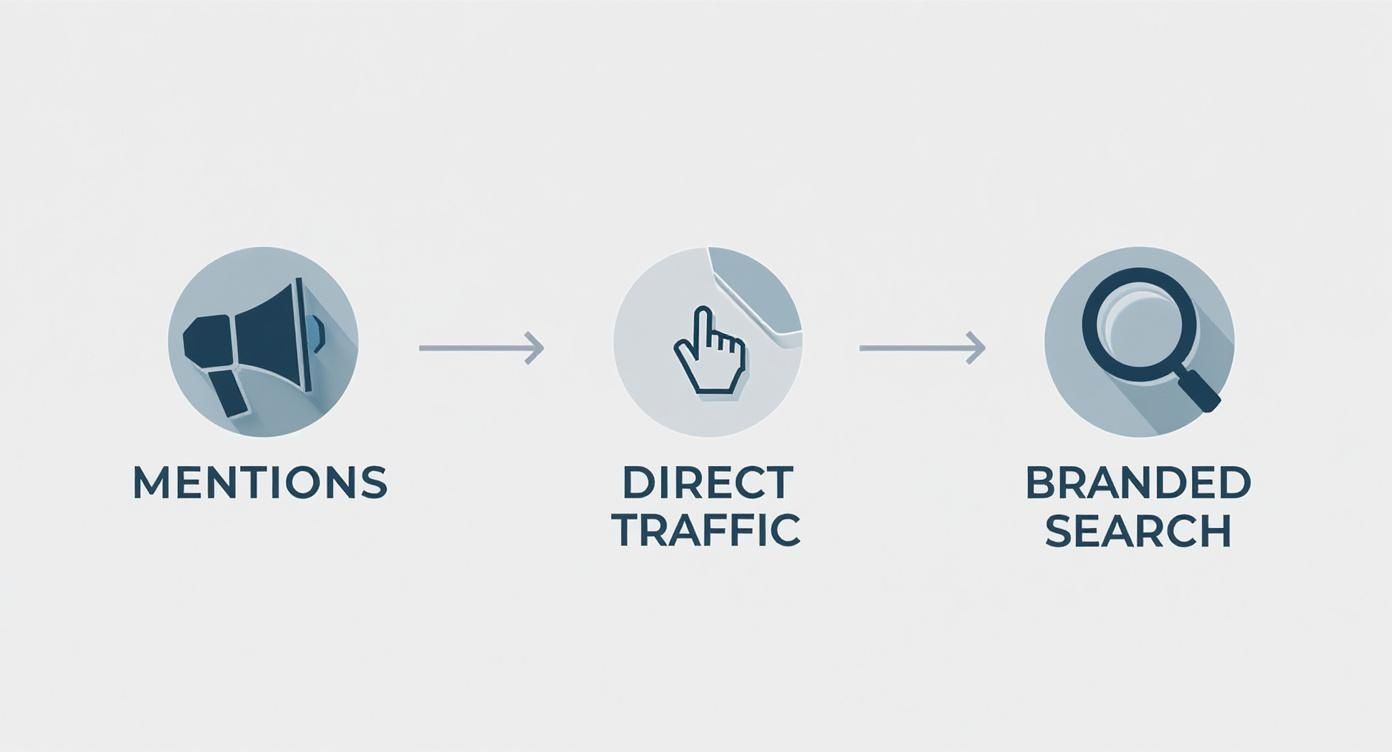
The progression is pretty clear: successful outreach gets you mentions, those mentions drive people directly to your site, and eventually, they start searching for your brand by name.
During this expansion, focus on these key areas:
- Goal: Amplify your core message and tap into established audiences.
- Recommended Activities:
- Guest Appearances: Start actively pitching yourself or other experts on your team as guests on industry podcasts and webinars. It's one of the fastest ways to build authority.
- Strategic Partnerships: Team up with non-competing brands that serve a similar audience. Think joint webinars, content swaps, or a co-branded research report.
- Early PR Efforts: Begin building real relationships with a few key journalists and publications in your niche. Share unique data or insights to earn media mentions.
- Key Metrics to Track:
- Referral Traffic: Are more visitors coming from partner sites and media outlets?
- Share of Voice: How does your brand’s mention volume stack up against your competitors?
- Branded Search Volume: Are more people typing your company’s name into Google?
The key to this phase is leverage. Instead of building every audience from scratch, you're tapping into communities that others have already built.
Phase 3: The Optimization (Months 10+)
After nearly a year of focused effort, you'll have a mountain of data on what’s working and what isn’t. This final phase is all about refining your strategy, doubling down on the high-performing channels, and building a sustainable, multi-channel brand awareness machine.
Optimization doesn't mean just adding more to your plate; it means making smarter decisions based on data.
- Goal: Maximize the ROI from your brand awareness efforts and establish yourself as a market leader.
- Recommended Activities:
- Data-Driven Investment: Dig into your metrics to see which channels and tactics are driving the best results. Reallocate your budget and team's time accordingly.
- Content Repurposing: Take your most successful content—like a popular webinar—and slice it into multiple assets. Think blog posts, social media clips, and infographics. Get more mileage out of your wins.
- Scaling What Works: If guest podcasting is driving a ton of great referral traffic, build a system to land even more interviews. If a specific content format kills it every time, make it a cornerstone of your strategy.
- Key Metrics to Track:
- Direct Traffic: Is your brand recall strong enough that people are coming straight to your site?
- Customer Acquisition Cost (CAC) by Channel: Which awareness activities are most efficiently contributing to new business?
- Inbound Lead Quality: Are your brand-building efforts attracting better-fit customers who are easier to close?
This phased approach turns brand building from a chaotic scramble into a manageable, strategic process. It ensures every action builds on the last, creating a powerful compounding effect that grows your brand’s presence in a way that is both effective and sustainable.
Answering Your Top Brand Awareness Questions
When you're deep in the trenches of building a brand, it's easy to get sidetracked by questions. Even the best-laid plans hit snags. Let's clear up some of the most common hurdles B2B and SaaS marketers face when trying to get their name out there.
How Long Does This Actually Take?
Ah, the million-dollar question. The honest, no-fluff answer is: it depends. Building real brand awareness—the kind that gets you recommended in Slack channels—isn't a switch you can flip overnight. It's a long game.
You might see some early sparks in metrics like social media engagement within a few months. But to see a real dent in the numbers that matter, like direct traffic and people searching for your brand by name, you’re looking at six to twelve months of consistent, focused work.
Consistency is everything. A targeted strategy you stick with day in and day out for a year will crush a splashy, expensive one-month campaign that vanishes without a trace.
Think of it like planting a tree. You won’t get a towering oak in a week. But with steady care, you'll eventually build something strong and unshakeable. Patience is your most valuable tool here.
Should We Be Paying for Ads to Build Our Brand?
Yes, but you have to be smart about it. Paid ads can be like rocket fuel for your brand, especially in the early days. It’s a way to jump the line and get your message in front of a very specific audience, fast, without waiting for organic traction to build.
But don’t make the mistake of thinking paid ads can replace your organic efforts. They should work together. Use your ad budget for specific, high-impact goals:
- Boost your winners: Got a fantastic pillar post or a killer webinar? Put some money behind it to make sure the right people see it.
- Test your messaging: Use A/B testing in your ads to figure out what language actually resonates with your audience. It's a cheap and fast way to learn before you commit to it across your entire strategy.
- Break into new markets: Use LinkedIn targeting to get in front of specific job titles or industries that your organic reach hasn't touched yet.
Paid ads are the fuel, but your organic strategy is the engine. You need both to really get moving.
What's the Difference Between Brand Awareness and Lead Gen?
This is a huge one, and a lot of marketers get it twisted. They're related, sure, but they are not the same thing. They have different jobs and need different playbooks.
| Aspect | Brand Awareness | Lead Generation |
|---|---|---|
| The Goal | Get your brand known, recognized, and trusted. It's about becoming a familiar face in your industry. | Get a potential customer's contact information. This is about turning attention into a direct sales opportunity. |
| How You Measure It | Share of voice, media mentions, direct traffic, branded search volume, social engagement. | Leads generated, cost per lead (CPL), conversion rate, marketing qualified leads (MQLs). |
| What You Do | Community engagement, helpful content, PR, podcast appearances, being active on social media. | Gated e-books, webinar sign-ups, demo requests, free trials, contact forms. |
Think of it this way: strong brand awareness is what makes lead generation easier and cheaper. When people already know who you are and trust what you have to say, they’re way more likely to give you their email for that e-book or sign up for a demo. One builds the foundation, the other builds the house.
Ready to turn online conversations into a predictable growth channel? Replymer does the heavy lifting for you. Our team of expert writers finds the right discussions on Reddit, X, and LinkedIn, crafts authentic replies, and gets your brand recommended in a way that builds real trust and drives qualified traffic. Stop shouting into the void and start joining the conversation. See how Replymer works.