In the crowded SaaS landscape, your product features are only half the story. The other, more influential half is told in Reddit threads, X discussions, LinkedIn comments, and G2 reviews. This digital conversation defines your brand long before a prospect ever visits your pricing page. A single negative comment can derail a high-value deal, while a wave of positive sentiment can become your most effective lead-generation channel. Ignoring this reality isn't an option; mastering it is a fundamental growth strategy.
Effective online reputation management is no longer a reactive, damage-control function. It's a proactive discipline for building trust, credibility, and a resilient brand. For B2B and SaaS teams, this means creating a system to listen, engage, and shape the narrative around your company. It involves turning detractors into advocates, amplifying positive feedback, and ensuring that a potential crisis is managed with a clear, pre-defined playbook. This isn't just about PR; it’s about creating a tangible business asset that directly impacts lead quality, sales cycles, and customer retention.
This guide moves beyond generic advice to provide a comprehensive breakdown of 10 battle-tested online reputation management best practices. We'll cover everything from setting up sophisticated monitoring and alerts to building an ironclad crisis communications plan. For a comprehensive understanding of the field, refer to our essential online reputation management guide. You will learn actionable strategies for responding with authenticity, proactively building a positive search footprint, and turning online chatter into your most powerful growth engine. Let's dive into the practices that will fortify your brand's digital presence.
1. Build a Proactive Monitoring & Alerting System
Effective online reputation management isn't reactive; it's proactive. The foundation of any strong strategy is a comprehensive system for listening to conversations about your brand, competitors, and industry across the digital landscape. Don't wait for a negative review to hit a major platform or a crisis to explode on social media. A robust monitoring and alerting system acts as your early warning signal.
This process involves more than just catching negative feedback. It's about identifying sales opportunities when a potential customer asks for recommendations, sourcing invaluable product feedback from a power user on Reddit, and finding chances to build goodwill by engaging in relevant industry discussions. This is one of the most fundamental online reputation management best practices because it transforms your team from firefighters into strategic communicators.
How to Implement a Monitoring System
To build an effective listening engine, combine automated tools with strategic human oversight. This hybrid approach ensures you capture the signal without getting lost in the noise.
- Automated Tools: Set up alerts using platforms like Google Alerts (free), Brand24, or Mention. These tools scan the web, social media, forums, and news sites for mentions of your chosen keywords.
- Keyword Configuration: Go beyond just your brand name. Monitor variations, common misspellings, key executive names, product names, and branded feature names. Also, track competitor brand names and industry-specific keywords to understand broader market sentiment and find opportunities to join conversations.
- Platform-Specific Listening: Dedicate resources to manually or semi-manually monitor key platforms where your audience congregates. For B2B SaaS, this often includes specific subreddits (e.g., r/sysadmin, r/sales), LinkedIn hashtag feeds, and relevant threads on X (formerly Twitter).
Pro Tip: Configure your alerts to deliver real-time notifications for high-priority keywords (like "brand name + outage" or "brand name + scam") directly to a dedicated Slack channel. Batch less urgent mentions into a daily digest to avoid alert fatigue.
2. Google Alerts and Search Monitoring
While a comprehensive system is the goal, the most accessible entry point to online listening is setting up automated alerts for your brand. Using tools like Google Alerts to monitor web mentions, keywords, and online conversations is a foundational tactic that enables swift identification of both reputation risks and engagement opportunities. This is your first line of defense, scanning new content across blogs, forums, and news sites.
For a B2B SaaS startup, this could mean catching a critical tweet from a high-profile user, finding an unlinked brand mention in a positive industry roundup, or discovering a potential customer asking for solutions in your niche. By automating the discovery process, you free up resources to focus on response and engagement. This simple, free step is one of the most cost-effective online reputation management best practices you can implement immediately.
How to Implement Google Alerts & Search Monitoring
Getting started with automated search monitoring is straightforward, but its effectiveness lies in the details of its configuration. A strategic setup separates valuable signals from distracting noise.
- Core Brand Alerts: At a minimum, create alerts for your brand name, key product names, and the names of your C-suite executives or public-facing founders. For example, a company like "DataWeave" should monitor that exact phrase.
- Include Variations: Add alerts for common misspellings ("Data Weave"), acronyms, or old brand names. Capturing these variations ensures you don't miss conversations due to simple errors.
- Crisis Keywords: Proactively set up alerts combining your brand name with negative-intent keywords. For example, "DataWeave + security breach," "DataWeave + outage," or "DataWeave + complaint" can provide an instant warning of a brewing issue.
Pro Tip: Google Alerts is a powerful free tool, but it doesn't catch everything, especially on social media. For more comprehensive coverage, consider integrating it with paid platforms. You can find more details in this guide to Google Alerts alternatives to expand your monitoring capabilities.
3. Proactive Content Creation and Publishing
The most effective defense against negative search results is a powerful offense. Instead of only reacting to negative content, you can proactively control your brand’s narrative by creating and publishing a high volume of positive, high-quality content. This strategy aims to dominate the first page of search results for your brand name with assets you own, effectively pushing any negative items down to pages where they are rarely seen.
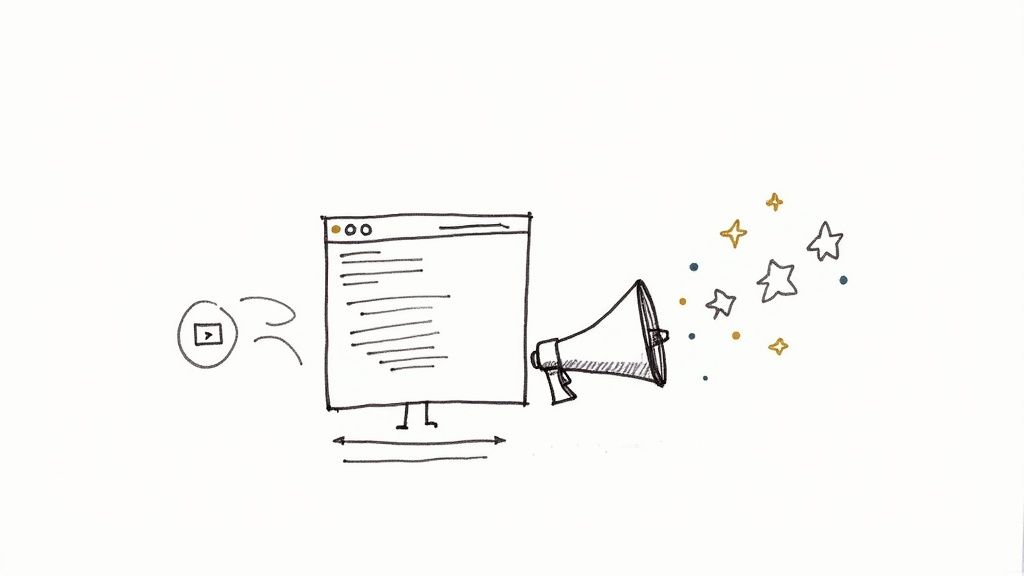
This approach showcases your company’s expertise, values, and positive accomplishments, building a digital fortress of positive sentiment. Think of HubSpot’s extensive educational blog or Patagonia’s content focused on environmental activism; both dominate search queries related to their brand and industry. Implementing this is a cornerstone of online reputation management best practices because it builds long-term brand equity and resilience against future reputational threats.
How to Implement a Content Publishing Strategy
An effective content strategy is built on consistency, value, and strategic optimization. The goal is to create a library of assets that directly address your audience’s needs while reinforcing your desired brand image.
- Solve Customer Problems: Center your content strategy around solving the specific pain points and answering the common questions of your target audience. Create in-depth guides, tutorials, and data-backed articles.
- Optimize for Search: Every piece of content should be optimized for relevant keywords, including branded and non-branded terms. For SaaS startups looking to effectively manage their search narrative, understanding the process of finding the best SEO consultant for SaaS companies can be a game-changer.
- Leverage Multimedia: Diversify your content formats to maximize reach and appeal. Produce videos, podcasts, infographics, and webinars. These assets can often rank on their own in search results and are highly shareable on social platforms.
- Build Executive Brands: Encourage key executives and subject matter experts to publish thought leadership content on platforms like LinkedIn and industry blogs. This builds both personal and corporate reputations simultaneously.
Pro Tip: Create a content "hub and spoke" model. Write a comprehensive pillar page on a core topic (the hub), then create multiple smaller pieces of content (blog posts, videos, social media updates) that link back to it (the spokes). This strategy builds topical authority and improves your search engine rankings.
4. Review Management and Response Strategy
Customer reviews are one of the most powerful forms of social proof, directly influencing purchasing decisions and search engine rankings. A systematic strategy for managing reviews isn't just about damage control; it's a vital channel for customer engagement, feedback collection, and brand building. By actively monitoring, responding to, and encouraging reviews, you demonstrate transparency and a commitment to customer satisfaction.
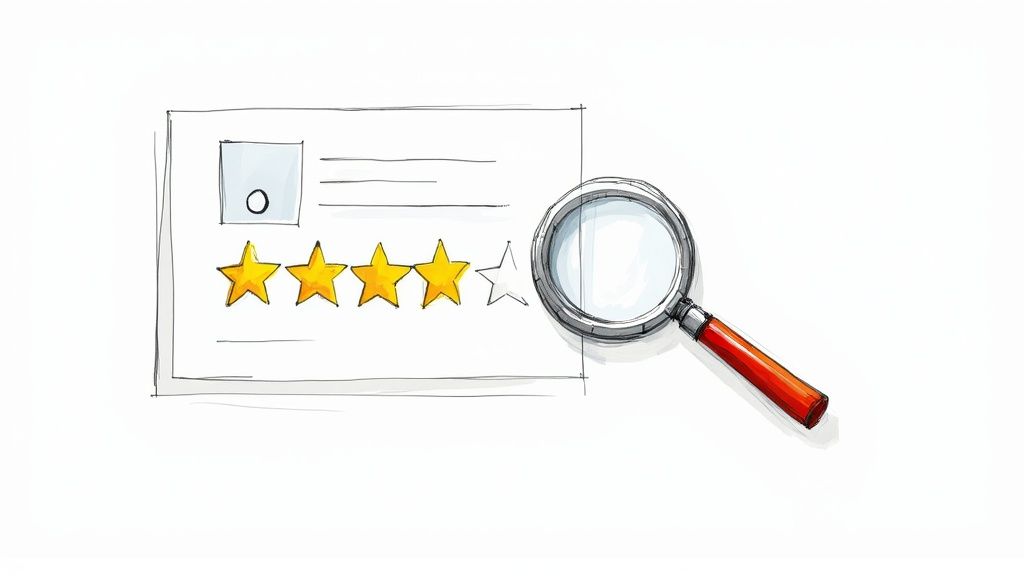
For a B2B SaaS company, a positive rating on G2 or Capterra can be the deciding factor for a potential lead. This proactive approach is one of the most impactful online reputation management best practices because it turns a static rating into a dynamic conversation, showcasing your company’s responsiveness and human side to prospective customers. It transforms feedback from a potential liability into a strategic asset.
How to Implement a Review Management Strategy
A successful review strategy requires a combination of timely responses and proactive solicitation. This process should be consistent across all relevant platforms to build a cohesive and trustworthy brand image.
- Platform Prioritization: Focus your efforts where it matters most. For B2B, this includes software review sites like G2, Capterra, and TrustRadius. For local services, Google Business Profile is critical. Identify the 2-3 platforms that most influence your target audience.
- Response Protocol: Create clear guidelines for responding to both positive and negative feedback. Aim to reply within 24-48 hours. A prompt, professional response to a negative review can often neutralize its impact and even win back a customer.
- Review Solicitation: Integrate review requests into your customer journey. Use automated email or in-app prompts to ask for feedback after a positive milestone, such as a successful onboarding, a contract renewal, or a positive support interaction.
Pro Tip: When responding to negative reviews, always acknowledge the customer's frustration, state facts without being defensive, and take the conversation offline to a direct channel like email or phone to resolve the specific issue. This shows accountability while protecting sensitive information.
5. Search Engine Optimization (SEO) for Reputation
Search Engine Optimization (SEO) is a powerful defensive and offensive tool in your reputation arsenal. It involves a set of strategies designed to ensure that positive, brand-controlled content dominates the search engine results pages (SERPs) for your brand name and related queries. When a potential customer searches for you, what they find should be accurate, positive, and created by you, not a single negative review or a misleading article.
By actively managing your search results, you can push undesirable or negative content further down, ideally off the first page where it's rarely seen. This isn't about deception; it's about owning your narrative and ensuring the most relevant and helpful information about your brand is the most visible. Mastering SEO is one of the most critical online reputation management best practices because it directly controls the first impression you make on a vast majority of your audience.
How to Implement SEO for Reputation
A successful reputation-focused SEO strategy requires a blend of technical optimization, content creation, and authority building. The goal is to create a "firewall" of positive assets that rank highly.
- Own Your SERPs: Create and optimize profiles on high-authority platforms like LinkedIn, X, Crunchbase, and relevant industry directories. These profiles often rank quickly for brand name searches and allow you to control more of the first-page real estate.
- Content Creation: Develop a robust content strategy around your brand. Create comprehensive pillar content, case studies, press releases, and blog posts that address potential customer questions and concerns. For instance, if you see negative chatter about your pricing, write a detailed article titled "[Your Brand] Pricing Explained" to control that search query.
- Backlink Building: Actively acquire high-quality backlinks from reputable industry websites, partners, and news outlets to your primary website and other owned properties. Backlinks act as votes of confidence for search engines, boosting the authority and ranking potential of your positive content.
Pro Tip: Target long-tail keywords related to your brand, such as "[Your Brand] vs [Competitor]" or "Is [Your Brand] legit?". Create dedicated, high-quality content to rank for these terms, proactively addressing user intent and shaping the conversation before it's defined by others.
6. Crisis Communication Planning and Response Protocol
A crisis can erase years of positive reputation-building in mere hours. Without a plan, teams scramble, misinformation spreads, and customers lose trust. A proactive Crisis Communication and Response Protocol is a pre-defined playbook that dictates exactly who does what, what is said, and through which channels when a high-stakes negative event occurs. It’s the difference between a controlled, measured response and a chaotic, brand-damaging free-for-all.
This process moves your organization from a state of panic to one of prepared readiness. Instead of debating roles and messaging in the heat of the moment, your team executes a rehearsed plan. This is one of the most critical online reputation management best practices because it provides clarity and control when you need it most, enabling you to protect your brand's integrity and retain customer loyalty even during a significant incident. The gold standard remains Johnson & Johnson's response to the 1982 Tylenol crisis, where their swift, transparent communication set the benchmark for corporate responsibility.
How to Implement a Crisis Response Protocol
Building a robust protocol requires foresight and formal documentation. The goal is to minimize decision-making time during the actual crisis by making those decisions in advance.
- Define and Assign Roles: Create a core crisis communication team with clearly defined responsibilities. This includes a spokesperson, internal communications lead, social media manager, and legal liaison. Document their contact information and specific duties.
- Identify Potential Scenarios: Brainstorm potential crises relevant to your SaaS business: a major data breach, a prolonged service outage, a key executive scandal, or viral misinformation. For each scenario, outline the initial steps and stakeholders.
- Prepare Holding Statements: Draft pre-approved messaging templates for various scenarios. These "holding statements" allow you to respond immediately and publicly, acknowledging the issue and promising more information, which buys you crucial time to gather facts.
Pro Tip: Don't just write the plan; pressure-test it. Run quarterly simulation exercises where the team must respond to a mock crisis, such as a simulated outage exploding on X (formerly Twitter). This practice reveals gaps in your protocol and builds the team's muscle memory for a real event.
7. Professional Online Profiles and Websites Optimization
Your owned digital assets, like your company website and key executive profiles, are the most powerful tools in your reputation management arsenal. Unlike third-party review sites or social media threads, you have direct control over the messaging, branding, and information presented. Optimizing these properties is not just about looking good; it's about creating authoritative, credible sources of information that Google and potential customers will trust.
When someone searches for your brand or leaders, these controlled profiles should dominate the first page of search results. This establishes an immediate foundation of trust and professionalism, pushing potentially negative or inaccurate third-party content further down. This is one of the most crucial online reputation management best practices because it allows you to build a reputational firewall on digital real estate you fully own.
How to Implement Profile & Website Optimization
A cohesive and professional presence requires a systematic audit and regular updates across all key platforms. The goal is consistency and completeness, ensuring your brand story is clear and compelling everywhere.
- Audit Your Digital Footprint: Start by searching for your company and key executives. Identify all owned profiles (LinkedIn, company website "About Us" page, industry directories like G2 or Capterra) and ensure they are claimed and up-to-date.
- Enforce Brand Consistency: Use the same high-resolution headshots, logos, and brand colors across all platforms. The summary or bio should tell a consistent story, tailored slightly for each platform's audience but rooted in the same core values and mission.
- Optimize for Search (SEO): Your website and profiles are search results. Write compelling, keyword-rich bios and descriptions that include your brand name, key services, and industry terms. For example, a B2B SaaS company's "About Us" page should clearly state its purpose, like "The leading AI-powered platform for B2B sales forecasting."
Pro Tip: Treat your key executives' LinkedIn profiles as strategic assets. Equip them with professionally written summaries that highlight their expertise and link back to company case studies or whitepapers. This transforms their profiles from simple resumes into powerful brand advocacy and lead-generation tools.
8. Community Building and Customer Advocacy
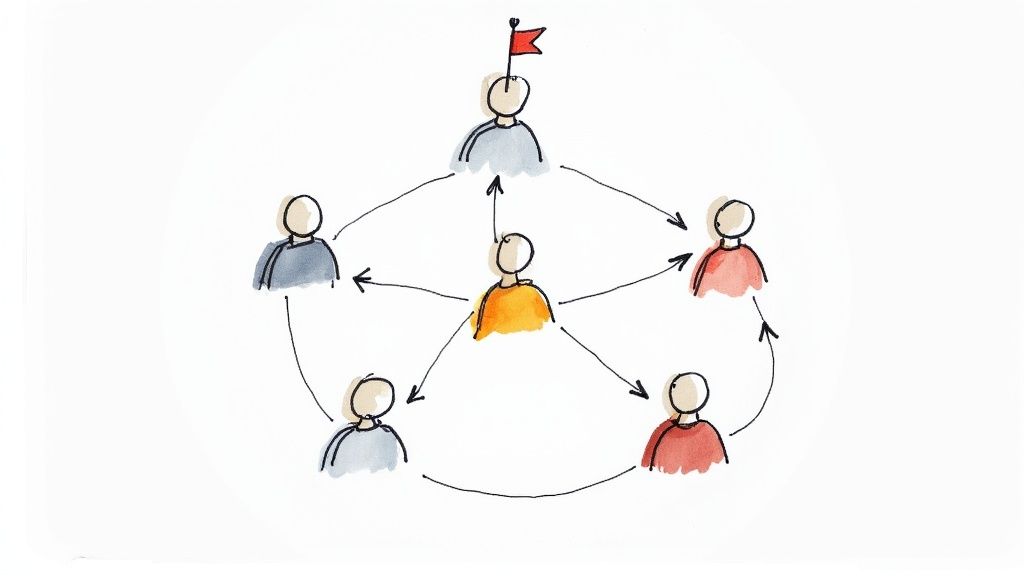
The most powerful defense for your online reputation is an offense built on a loyal customer base. Community building is the strategic practice of creating a dedicated space where your customers can connect with each other and your brand, transforming them from passive users into active advocates. This organic groundswell of support provides an authentic, powerful buffer against negative sentiment and generates invaluable positive word-of-mouth.
Instead of just selling a product, you are fostering an ecosystem. When customers feel a sense of belonging, they are more likely to share their success stories, defend your brand in public forums, and provide constructive feedback. This is one of the most sustainable online reputation management best practices because it turns your happiest customers into a volunteer marketing and reputation-defense team, as exemplified by communities like Salesforce's Trailblazers or Patagonia's activist network.
How to Build a Community of Advocates
Fostering a genuine community requires investment in infrastructure, engagement, and recognition. It’s about giving more than you take and creating real value for its members.
- Create Dedicated Spaces: Establish a home for your community, whether it's a Slack group, a dedicated forum on your website, a private subreddit, or a LinkedIn group. The platform should align with where your customers naturally spend their time.
- Recognize and Reward: Actively identify and celebrate your most engaged members. This can be through "super user" badges, exclusive access to new features, company swag, or public shout-outs on social media.
- Facilitate Peer-to-Peer Connection: Your primary role is to be a facilitator, not a broadcaster. Encourage members to answer each other's questions, share best practices, and collaborate. Host virtual events, AMAs (Ask Me Anything) with your product team, or user-led workshops. For more guidance, explore these community engagement best practices on replymer.com.
Pro Tip: Seed your community with a "founding members" program. Invite your most loyal and vocal customers to join first, giving them a sense of ownership and empowering them to help you shape the community's culture from day one.
9. Transparency and Authentic Communication
In an era of deep consumer skepticism, a defensive or secretive posture is a liability. Radical transparency and authentic communication have evolved from a niche philosophy into a core component of modern brand building. This approach involves being proactively honest about your company’s practices, values, challenges, and even its mistakes. It’s about treating your audience like intelligent partners rather than just consumers.
This shift builds immense trust and brand loyalty. When customers see you openly discussing product limitations, admitting when you've made a mistake, or sharing the reasoning behind a price increase, they are more likely to give you the benefit of the doubt during a real crisis. Adopting this strategy is one of the most powerful online reputation management best practices because it inoculates your brand against accusations of being disingenuous or "corporate."
How to Implement Authentic Communication
Integrating transparency requires a cultural commitment that starts from the top down. It’s not a marketing campaign; it's an operational ethos that manifests in how you communicate both internally and externally.
- Admit Mistakes Publicly: When something goes wrong, address it head-on. Don't hide, deflect, or use vague corporate-speak. Explain what happened, what you're doing to fix it, and how you'll prevent it from happening again. Domino's Pizza's famous "Our Pizza Sucks" campaign is a masterclass in this.
- Share Your Values and Actions: Clearly state what your company stands for and demonstrate it through consistent action. Patagonia's activism and transparent reporting on its environmental impact create an authentic connection with its audience that transcends its products.
- Show the People Behind the Brand: Use your blog, social media, and newsletters to share stories about your team, your culture, and the challenges you face as a growing company. Buffer’s long-standing practice of sharing revenue numbers and even employee salaries sets a high bar for operational transparency.
Pro Tip: Create a "public-by-default" mindset for non-sensitive information. Before keeping something internal, ask, "Is there a good reason not to share this?" Sharing your journey, including the struggles, makes your brand more relatable and human.
10. Professional PR and Media Relations Strategy
While direct brand management is crucial, earned media provides unparalleled third-party validation that can significantly bolster your online reputation. A professional public relations (PR) and media relations strategy involves proactively building relationships with journalists, bloggers, and industry influencers to secure positive, authentic coverage. This isn't just about sending out press releases; it's about shaping a compelling narrative that media outlets want to share with their audiences.
Securing coverage in respected publications like TechCrunch or industry-specific blogs acts as a powerful, permanent asset in your digital footprint. This approach is one of the most effective online reputation management best practices because positive articles from trusted sources rank highly in search results, often outranking negative content and providing a strong, credible counter-narrative. A well-placed story can redefine public perception more effectively than hundreds of social media posts.
How to Implement a Media Relations Strategy
A successful PR strategy is built on genuine relationships and newsworthy storytelling, not just promotional outreach. It requires a long-term commitment to providing value to journalists and their readers.
- Build a Targeted Media List: Identify journalists and publications that cover your industry, competitors, or problem space. Follow them on social media, engage with their work, and understand the types of stories they are interested in.
- Develop Newsworthy Angles: Go beyond simple product announcements. Create stories around proprietary data, customer success case studies, industry trend analysis, or executive thought leadership. For instance, package your user data into a compelling industry report that journalists can cite.
- Create a High-Quality Media Kit: Make it easy for journalists to cover you. Your media kit should include high-resolution logos, executive headshots, a company fact sheet, and pre-approved boilerplate descriptions.
- Master the Art of the Pitch: Personalize every outreach email. Clearly explain why your story is relevant to their specific audience, provide all necessary information upfront, and be concise and respectful of their time.
Pro Tip: Don't just pitch when you need something. Offer journalists exclusive data, connect them with expert sources within your company for other stories, or share relevant industry news. Building a reputation as a helpful resource will pay dividends when you have an announcement to make. To dive deeper, explore these earned media strategies and see how to get started.
10-Point Comparison of Online Reputation Management Best Practices
| Approach | Implementation Complexity 🔄 | Resource & Speed ⚡ | Expected Outcomes 📊⭐ | Ideal Use Cases & Tips 💡 | Key Advantages ⭐ |
|---|---|---|---|---|---|
| Active Social Media Presence and Engagement | Medium — ongoing scheduling, moderation 🔄 | High time commitment; enables real-time responses ⚡ | Builds visibility & engagement; variable ROI 📊 ⭐⭐⭐ | B2C brands & customer support — use a content calendar and monitor mentions 💡 | Direct audience interaction; strong loyalty building ⭐ |
| Google Alerts and Search Monitoring | Low — simple setup, continuous review 🔄 | Low cost; rapid alerts but needs manual triage ⚡ | Early detection of mentions; limited completeness 📊 ⭐⭐ | Small teams & startups — include misspellings and review daily 💡 | Free early-warning system for reputation risks ⭐ |
| Proactive Content Creation and Publishing | High — strategy, production, SEO integration 🔄 | High resource investment; slow to show ROI ⚡ | Strong search authority; pushes negatives down 📊 ⭐⭐⭐⭐ | Thought leadership, brand recovery — repurpose across formats weekly 💡 | Long-term credibility and SEO benefits ⭐ |
| Review Management and Response Strategy | Medium — centralized monitoring and templating 🔄 | Moderate ongoing effort; timely responses critical ⚡ | Improves trust, local SEO and conversions 📊 ⭐⭐⭐ | Local services, marketplaces — respond to all reviews within 48h 💡 | Demonstrates customer care publicly; influences purchase decisions ⭐ |
| Search Engine Optimization (SEO) for Reputation | High — technical & content work, backlinks 🔄 | Significant resources; long-term timeline (3–6+ months) ⚡ | Sustainable organic visibility and traffic growth 📊 ⭐⭐⭐⭐ | Brands needing search remediation — target long-tail keywords and pillars 💡 | Cost-effective, compounding visibility and authority ⭐ |
| Crisis Communication Planning and Response Protocol | High — cross-functional planning, drills 🔄 | Medium–high investment up front; enables fast response ⚡ | Faster mitigation and consistent messaging; limits damage 📊 ⭐⭐⭐⭐ | Regulated/high-risk orgs — prepare holding statements and run simulations 💡 | Minimizes reputational fallout; preserves stakeholder trust ⭐ |
| Professional Online Profiles and Websites Optimization | Low–Medium — profile & site updates, NAP consistency 🔄 | Low ongoing maintenance; quick improvements possible ⚡ | Controlled narrative and improved discoverability 📊 ⭐⭐⭐ | Executive branding, recruitment — keep profiles current and consistent 💡 | Authoritative owned assets that build legitimacy ⭐ |
| Community Building and Customer Advocacy | High — slow cultivation and active moderation 🔄 | Moderate recurring effort; slow but durable growth ⚡ | Authentic word-of-mouth and long-term loyalty 📊 ⭐⭐⭐⭐ | Niche & subscription brands — reward advocates and host events 💡 | Generates UGC and trusted peer recommendations ⭐ |
| Transparency and Authentic Communication | Medium — policy alignment and cultural change 🔄 | Moderate resources; trust effects can be immediate ⚡ | Deeper stakeholder trust and differentiation 📊 ⭐⭐⭐ | Purpose-driven companies — admit mistakes and explain fixes openly 💡 | Builds deep credibility and long-term loyalty ⭐ |
| Professional PR and Media Relations Strategy | Medium–High — relationship building, pitching 🔄 | Moderate to high cost; reach is high but timing uncertain ⚡ | Third‑party credibility, broad exposure, backlinks 📊 ⭐⭐⭐ | Product launches, reputation repair — craft newsworthy, personalized pitches 💡 | Amplifies stories via media; adds external validation ⭐ |
Your Reputation is Built in Conversations: Start Managing Them Today
Navigating the digital landscape of 2024 and beyond requires more than just a great product or service; it demands a meticulously managed online reputation. We’ve journeyed through ten foundational pillars of online reputation management best practices, from establishing an active social media presence to architecting a robust crisis communication plan. The central theme connecting each of these strategies is clear: your brand’s reputation isn't a static asset you own, but a dynamic, living entity co-created in every online interaction, every review, and every piece of content that mentions your name.
Think of it less as "management" and more as "stewardship." You are the steward of your brand’s narrative, tasked with guiding conversations, addressing concerns with authenticity, and proactively building a digital footprint that reflects your company’s true value and values. The practices outlined in this guide, such as proactive content creation and strategic SEO, are your tools for building a "reputational moat" that not only defends against negativity but actively attracts your ideal customers.
From Reactive Defense to Proactive Growth
The most critical mindset shift for any SaaS founder or marketing leader is to view reputation management not as a defensive cost center, but as a proactive growth engine. Every positive review you earn is social proof that closes deals. Every helpful response on Reddit or X builds a community of advocates. Every piece of high-ranking content that addresses a customer pain point establishes your authority and generates inbound leads. This is where the true ROI of these efforts lies.
Your immediate next steps should be grounded in action. Don't let this comprehensive list overwhelm you. Instead, choose a starting point that addresses your most significant vulnerability or your biggest opportunity.
- If you have zero visibility: Begin with Google Alerts and Search Monitoring (Practice #2). You cannot manage what you do not measure. Set up alerts for your brand name, key executives, and top products immediately.
- If you're facing negative reviews: Focus on developing a Review Management and Response Strategy (Practice #4). Create templates, define your tone, and start engaging with both positive and negative feedback today.
- If your search results are lackluster: Prioritize SEO for Reputation (Practice #5) and Proactive Content Creation (Practice #3). Start mapping out content that answers your audience's questions and begin optimizing your professional profiles.
The Human Element in a Digital World
Ultimately, the most effective online reputation management best practices are rooted in a fundamentally human approach. Behind every tweet, review, and forum post is a person. Responding with transparency, empathy, and a genuine desire to help is what transforms a potentially damaging situation into a brand-building opportunity. Building a community of advocates isn't about gaming an algorithm; it's about fostering real relationships.
Your brand's digital legacy is being written in real-time, with or without your participation. By implementing these strategies, you are seizing control of the pen. You are choosing to be an active participant in the conversations that define you, turning passive mentions into active relationships, and transforming your online reputation from a potential liability into your most powerful and sustainable growth asset. The work begins now.
Ready to turn thousands of scattered online conversations into measurable growth? Replymer’s human-powered service scours platforms like Reddit, X, and LinkedIn to find relevant mentions, then crafts authentic, high-quality replies to build your brand’s reputation and drive qualified leads. Stop just monitoring your reputation and start actively building it, one meaningful conversation at a time with Replymer.


