Creating great content is only half the battle. Hitting 'publish' and hoping for the best is a strategy for failure. If your target audience never sees your work, it essentially doesn't exist. This reality is the core reason why a deliberate, systematic approach to distribution is not just important, it's the engine of marketing success. Without effective content distribution strategies, even the most insightful article, in-depth guide, or compelling video will fail to generate traffic, leads, or revenue. Your content becomes a sunk cost rather than a business asset.
This article moves beyond the myth that quality content promotes itself. We will dive straight into ten actionable, battle-tested strategies that separate viral hits from digital dust collectors. You will get a comprehensive framework that integrates owned, earned, and paid media, providing specific tactics for each channel. We’ll cover everything from optimizing for long-term SEO gains and building loyal communities to leveraging paid advertising for immediate impact and scaling your efforts with authentic outreach. To further explore a comprehensive range of methods for amplifying your content's reach, delve into these top content distribution strategies for additional insights.
Whether you're a founder building in public, a B2B SaaS marketer focused on ROI, or a growth lead aiming for predictable demand generation, this guide will equip you with the frameworks to prioritize channels, measure what matters, and finally get the return your content deserves. Let's build a distribution system that works.
1. Omnichannel Distribution
Omnichannel distribution isn't just about being present on multiple platforms; it's about creating a unified, seamless brand experience across every touchpoint. This strategy integrates your content efforts across owned, earned, and paid channels like social media, email, your blog, and even in-person events, ensuring the customer journey is consistent no matter where they interact with your brand.
The core principle is to make the transition between channels feel effortless and natural for the user. For instance, a customer might see a product ad on Instagram, click through to a blog post on your website, sign up for your newsletter for a discount, and later receive a push notification from your mobile app. Each piece of content is contextually aware of the others, creating a cohesive narrative rather than a series of disconnected messages. This is one of the most foundational content distribution strategies because it prioritizes the customer experience above all else.
How to Implement an Omnichannel Strategy
- Map the Customer Journey: Identify all potential touchpoints where a customer might interact with your content. This helps you understand where to be and what message to deliver at each stage.
- Centralize Your Content: Use a content management system (CMS) or digital asset management (DAM) platform to store and manage all your content assets. This ensures consistency and makes it easier to adapt content for different channels.
- Unify Analytics: Implement a centralized analytics platform to track user behavior across all channels. This gives you a holistic view of performance and helps you understand how different channels work together to drive conversions.
- Personalize the Experience: Leverage customer data to deliver personalized content. For example, if a user has read a blog post about a specific feature, you can follow up with a targeted email campaign showcasing a case study related to that feature.
Key Insight: The goal of omnichannel is to eliminate the concept of "channels" from the user's perspective. It should feel like one continuous conversation with your brand, regardless of the platform. Think of Starbucks, whose mobile app, email rewards, and in-store promotions all work in perfect sync to create a single, unified customer experience.
2. Social Media Distribution
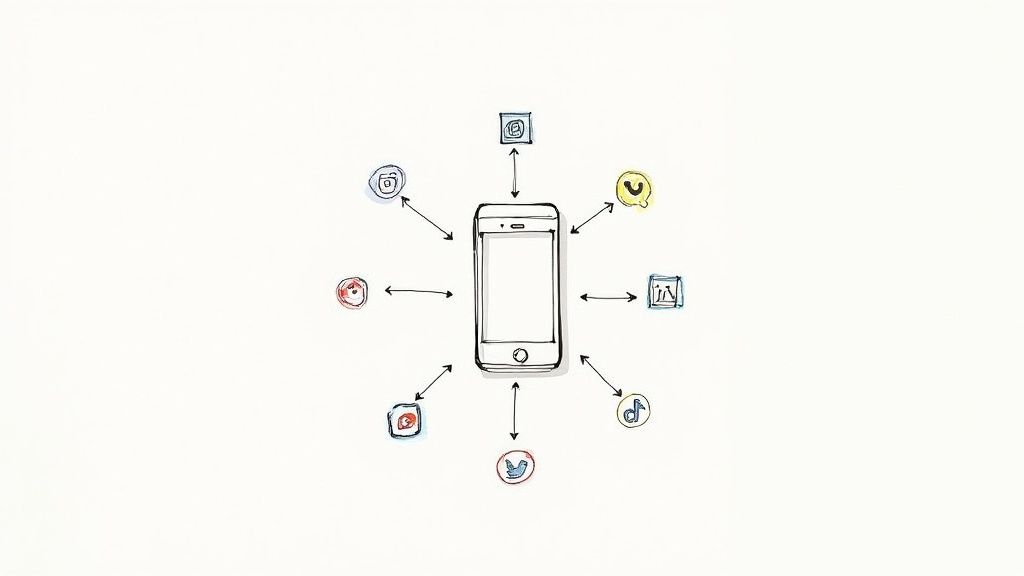
Social media distribution is a strategy focused on leveraging platforms like LinkedIn, Instagram, TikTok, and Facebook to amplify content visibility and foster community engagement. This approach goes beyond simply posting links; it involves tailoring content to each platform's unique format and audience expectations, using a mix of organic reach, paid advertising, and community interaction to drive meaningful results.
This method transforms passive content consumption into an active, two-way conversation. For real-time updates and discussions, consider leveraging platforms like Twitter as a social distribution channel. The goal is to meet your audience where they are most active and deliver value in the format they prefer, whether it's a short-form video on TikTok, a detailed carousel on LinkedIn, or an engaging Story on Instagram. This is one of the most dynamic content distribution strategies because it capitalizes on the network effects and viral potential inherent in social platforms.
How to Implement a Social Media Distribution Strategy
- Select the Right Platforms: Don't try to be everywhere. Focus on the platforms where your target audience, particularly for B2B or SaaS, is most active and engaged. A B2B brand might prioritize LinkedIn, while a D2C brand might focus on Instagram and TikTok.
- Adapt Content Natively: Repurpose your core content into platform-specific formats. A blog post can become a LinkedIn article, a Twitter thread, an Instagram carousel, and a script for a TikTok video. This maximizes relevance and engagement.
- Engage Proactively: Social media is a conversation. Actively respond to comments, participate in relevant discussions, and engage with other accounts in your niche to build community and increase visibility.
- Analyze and Optimize: Use platform-native analytics to track what's working. Monitor metrics like engagement rate, reach, and click-throughs to refine your approach. Learn more about optimizing your social media performance on Replymer.com.
Key Insight: The most successful social media distribution isn't about broadcasting; it's about participating. Brands like Duolingo win on TikTok not by advertising, but by becoming genuine creators who understand the platform's culture, trends, and humor, thereby building a loyal and engaged following.
3. Email Marketing Distribution
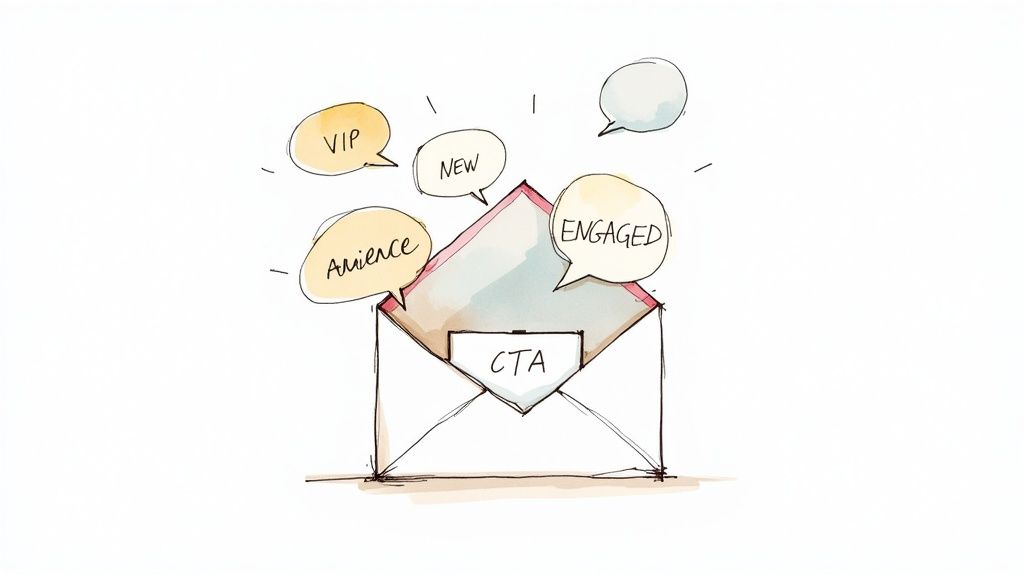
Email marketing distribution is one of the most direct and powerful owned-channel strategies, allowing you to deliver curated content straight to your audience's inboxes. Unlike algorithms on social media or search engines, email gives you a direct line of communication to a list of subscribers who have explicitly opted in, making it a highly effective channel for nurturing leads, driving engagement, and retaining customers. This method excels at building relationships over time by consistently providing value.
The core principle is to treat your subscribers' attention as a privilege. Instead of just blasting promotions, successful email distribution focuses on delivering relevant, personalized, and timely content. For example, a new subscriber might receive a carefully crafted onboarding sequence from Grammarly that educates them on product features, while a long-time customer of Amazon receives hyper-personalized product recommendations. This targeted approach is what makes email one of the most reliable content distribution strategies for driving measurable ROI.
How to Implement an Email Marketing Distribution Strategy
- Build a Quality List: Focus on organic list growth through valuable lead magnets like ebooks, webinars, or exclusive content. Avoid purchasing lists, as this leads to low engagement and high unsubscribe rates.
- Segment Your Audience: Group subscribers based on their behavior, demographics, or interests. A B2B SaaS company might segment by company size, while an e-commerce brand might segment by purchase history. Platforms like ActiveCampaign and Klaviyo excel at this.
- Craft Compelling Campaigns: Write subject lines that are clear, concise, and create curiosity (41-50 characters is often the sweet spot). Ensure every email provides genuine value and includes a single, clear call-to-action (CTA).
- Optimize and Test: A/B test everything from subject lines and send times to CTA button colors. Monitor key metrics like open rates, click-through rates, and unsubscribe rates to continually refine your approach and ensure your emails are mobile-optimized.
Key Insight: The power of email is not in the size of your list but in its engagement. Think of The New York Times' newsletter strategy; they offer dozens of niche newsletters like "Cooking" or "Morning Briefing," allowing subscribers to choose exactly what content they want. This high level of control and personalization builds immense trust and keeps readers coming back.
4. Content Syndication
Content syndication is a powerful strategy where you republish your content on third-party websites and platforms to expand its reach far beyond your owned channels. Instead of waiting for new audiences to find you, this approach actively places your content where they already are, whether on major media outlets, industry publications, or content aggregation platforms. The goal is to gain massive exposure, build brand authority, and drive referral traffic back to your site.

This method essentially gives your best-performing articles, studies, or infographics a second life. A prime example is seeing a business article on a platform like LinkedIn, which was originally published on the company's blog. By partnering with platforms like Outbrain or Taboola, or establishing direct relationships with publications, you can systematically get your content in front of millions of potential customers. It is one of the most effective content distribution strategies for quickly scaling visibility and leveraging the established authority of other domains.
How to Implement a Content Syndication Strategy
- Choose Strategic Partners: Identify websites, publications, or platforms whose audience closely matches your ideal customer profile. Quality of audience is more important than sheer quantity of traffic.
- Establish Clear Agreements: Define the terms of syndication clearly. Ensure you retain ownership of your content and specify how you will be credited, typically with a link back to the original article on your site.
- Use Canonical Tags: To avoid SEO penalties for duplicate content, ensure the syndicating site uses a
rel="canonical"tag pointing back to your original URL. This tells search engines that your page is the primary version. - Optimize for Referral Traffic: Tweak your syndicated content to include strong calls-to-action (CTAs) that encourage readers to click back to your website to download a resource, read a related post, or request a demo.
Key Insight: Content syndication is not just about republication; it’s a form of strategic partnership. The best syndication relationships are mutually beneficial, providing the publisher with quality content and giving your brand exposure to a highly relevant, pre-built audience. Think of how major publications like Forbes use contributor networks to syndicate expert content, amplifying reach for both the author and the platform.
5. SEO-Optimized Content Distribution
SEO-optimized content distribution is a strategy that prioritizes search engine visibility from the very beginning. Instead of creating content and then figuring out how to promote it, this approach builds distribution directly into the content creation process by focusing on topics and formats proven to rank well in search results. It’s about strategically targeting keywords, satisfying search intent, and building authority to capture a steady stream of organic traffic.
The core principle is to treat search engines like Google as your primary distribution channel. By conducting thorough keyword research and optimizing your content for both users and search algorithms, you create an asset that continuously attracts a relevant audience long after its publication date. This method transforms your blog or website into a powerful, self-sustaining lead-generation machine. As one of the most sustainable content distribution strategies, it delivers compounding returns over time, unlike paid campaigns that stop when you stop spending.
How to Implement an SEO-Optimized Strategy
- Conduct Intent-Driven Keyword Research: Go beyond simple keywords and understand the user's goal (the "why") behind the search query. Create content that directly answers their question or solves their problem, whether it's informational, commercial, or transactional.
- Build Topical Clusters: Organize your content around a central "pillar" page that covers a broad topic, then link out to more specific "cluster" pages that dive deeper into subtopics. This structure signals your expertise to search engines and keeps users engaged.
- Prioritize On-Page and Technical SEO: Ensure every piece of content has optimized titles, meta descriptions, headers, and internal links. Additionally, maintain a technically sound website with fast load times, mobile-friendliness, and a clean URL structure. You can learn more about how to increase website traffic organically on replymer.com.
- Earn High-Quality Backlinks: Develop content that naturally attracts links from other reputable websites. This can include original research, data-driven reports, comprehensive guides, or free tools that other creators will want to reference and cite.
Key Insight: Think of your content as an investment, not an expense. Companies like Ahrefs and Backlinko built their entire brands by creating best-in-class, SEO-optimized guides that dominate search results for high-value industry terms. They don't just write a blog post; they create the definitive resource on a topic, ensuring it becomes a long-term traffic driver.
6. Influencer and Creator Partnerships
This strategy involves collaborating with established influencers, content creators, and brand ambassadors to tap into their highly engaged, niche audiences. Instead of building an audience from scratch, you borrow the trust and authority of a creator who has already cultivated a loyal following. This method turns a trusted voice into a powerful distribution channel, placing your content directly in front of a receptive and relevant community.
The core principle is authentic alignment. The most effective partnerships feel less like an advertisement and more like a genuine recommendation from a trusted source. For example, a productivity SaaS might partner with a popular business coach on YouTube to create a video tutorial showcasing how the software solves a common workflow problem for entrepreneurs. These content distribution strategies excel because they leverage pre-built trust, allowing your message to bypass the skepticism often directed at traditional brand advertising.
How to Implement a Creator Partnership Strategy
- Prioritize Audience Alignment: Use creator discovery platforms to find influencers whose audience demographics and psychographics match your ideal customer profile. The creator's personal brand and values must resonate with your own.
- Start with Micro-Influencers: Focus on creators with 10,000 to 100,000 followers. They often have higher engagement rates and a more dedicated community, delivering a stronger ROI than macro-influencers for B2B and SaaS brands.
- Co-Create Content: Work with the creator to develop content that feels natural to their style and provides genuine value to their audience. Provide clear guidelines and key messages but allow for creative freedom to maintain authenticity.
- Establish Clear Tracking: Implement unique UTM links, affiliate codes, or dedicated landing pages for each creator. This allows you to accurately measure the traffic, leads, and conversions generated from each partnership.
Key Insight: The goal is to build long-term relationships, not execute one-off transactional campaigns. Think of it as building a network of brand advocates. By investing in creators who genuinely love your product, like Skillshare does with its educational creator programs, you create a sustainable and authentic distribution channel that grows over time.
7. Paid Advertising and Sponsored Content
While many strategies focus on organic reach, paid advertising offers a direct and accelerated path to get your content in front of highly specific audiences. This method involves paying for placements on platforms like search engines, social media networks, and publisher websites to target users based on demographics, interests, and intent. It prioritizes speed, precision, and scalability over waiting for organic traction.
The core principle of this strategy is exchanging budget for immediate visibility and control. Instead of hoping the right people discover your content, you can use sophisticated targeting tools to place it directly in their feeds or search results. For example, a B2B SaaS company can use LinkedIn Sponsored Content to promote a new whitepaper to professionals with specific job titles in a target industry. This makes it one of the most powerful content distribution strategies for generating qualified leads quickly and predictably.
How to Implement a Paid Advertising Strategy
- Define Clear Objectives: Before launching a campaign, establish specific, measurable goals. Are you aiming for webinar sign-ups, ebook downloads, or trial subscriptions? Clear key performance indicators (KPIs) will guide your campaign optimization.
- Segment Your Audience: Avoid a one-size-fits-all approach. Use the platform's targeting options to create distinct audience segments and tailor your ad creative and content offers to each group's unique pain points and interests.
- Test and Iterate Relentlessly: Start with a modest budget to test multiple ad variations, including different headlines, images, and calls-to-action. Identify the top-performing combinations and reallocate your budget to scale the winners.
- Implement Robust Tracking: Ensure proper conversion tracking is in place using tools like the Meta Pixel or Google Ads conversion tracking. This is essential for measuring return on ad spend (ROAS) and making data-driven decisions to optimize performance.
Key Insight: Paid distribution is not just about promoting products; it's a powerful tool for amplifying your best-performing organic content. Boosting a blog post that already has high engagement can significantly expand its reach, drive traffic, and introduce your brand to new, relevant audiences who are likely to find the content valuable.
8. Community Building and Engagement
Community building as a distribution strategy focuses on creating a dedicated space where your audience can connect, share, and engage with your content and each other. Instead of pushing content out, you cultivate an environment where members become advocates, organically sharing and discussing your material because it provides genuine value to the group. This turns distribution from a one-way broadcast into a self-sustaining cycle of peer-to-peer amplification.
This approach creates a powerful feedback loop. Members in dedicated spaces like Slack, Discord, or private forums don't just consume content; they actively discuss it, ask questions, and suggest new topics. For example, a SaaS company might create a Slack community for its power users, who then share the company's latest blog post on best practices, adding their own insights and encouraging others to read it. This is one of the most effective content distribution strategies for fostering loyalty and generating authentic, user-driven reach.
How to Implement a Community Building Strategy
- Define a Clear Purpose: Establish why your community exists beyond just promoting your brand. Is it for professional development, product feedback, or connecting people with a shared interest? A clear mission attracts the right members.
- Provide Exclusive Value: Give members a reason to join and stay active. Offer early access to content, exclusive templates, Q&A sessions with experts, or behind-the-scenes looks at your company.
- Facilitate, Don't Dominate: Your role is to be a moderator and facilitator, not a constant broadcaster. Encourage member-to-member conversations and highlight user-generated content and discussions.
- Gather Content Feedback: Use the community as a real-time focus group. Ask them what content they need, what questions they have, and what formats they prefer. This ensures you create content that is guaranteed to resonate. For a deeper dive, explore these community engagement best practices on replymer.com.
Key Insight: A successful community isn't built around your brand; it's built around the shared identity and goals of its members. Your brand is simply the host of the conversation. Notion’s thriving user community, which creates and shares countless templates, is a prime example of a community that provides more value to users than the brand ever could alone.
9. Video and Multimedia Distribution
Video and multimedia distribution is a strategy that leverages visually and audibly engaging formats like video, podcasts, infographics, and interactive content to capture audience attention. This approach recognizes that multimedia content often generates significantly higher engagement, shareability, and retention rates across social media and other digital platforms compared to traditional text-based articles.
The core principle is to communicate complex ideas or tell compelling stories in a more dynamic and easily digestible format. For B2B and SaaS companies, this means transforming a technical whitepaper into an animated explainer video, a case study into a podcast interview with a client, or data-heavy research into a shareable infographic. These diverse formats make your content more accessible and appealing to different learning styles, broadening its reach and impact. As one of the most effective content distribution strategies today, it taps into the audience's preference for rich media experiences.
How to Implement a Multimedia Strategy
- Prioritize Platform-Native Content: Don’t just post the same video everywhere. Create platform-specific versions, like short, vertical clips for TikTok or Instagram Reels, and longer, in-depth tutorials for YouTube.
- Optimize for Search and Discovery: For videos, focus on YouTube SEO by crafting keyword-rich titles, descriptions, and tags. For podcasts, ensure you submit to all major directories like Spotify and Apple Podcasts and write detailed show notes.
- Repurpose Aggressively: A single webinar can be repurposed into dozens of assets. Pull out key quotes for social media graphics, convert the audio into a podcast episode, transcribe the session for a blog post, and create short video clips of the best moments.
- Focus on the First Few Seconds: Capture attention immediately with a strong hook. Whether it's a video or a podcast, the opening moments are critical for preventing users from scrolling or skipping. Use compelling thumbnails and opening lines to draw them in.
Key Insight: Multimedia isn't just about creating a video; it's about building an entire content ecosystem around a core idea. Think of Wistia, a video hosting platform that practices what it preaches by creating original docuseries, podcasts, and video-centric blog posts that all work together to educate their audience and promote their product.
10. Strategic Partnerships and Co-Marketing
Strategic partnerships involve collaborating with another brand to co-create and co-distribute content, effectively tapping into each other's audiences. This approach is built on mutual benefit, allowing you to leverage a partner's credibility, reach, and resources to amplify your own content efforts while offering them the same in return. It's a powerful way to access new, relevant audiences that would be difficult or expensive to reach alone.
The core idea is to find a non-competing brand that serves a similar customer profile. For instance, a project management software company might partner with a time-tracking app to create a joint webinar on productivity. By combining forces, both brands gain exposure to a pre-qualified audience, share the content creation workload, and benefit from the implied endorsement of a trusted partner. This is one of the most effective content distribution strategies for building authority and generating high-quality leads.
How to Implement a Co-Marketing Strategy
- Identify Potential Partners: Look for companies with aligned values and a complementary audience. Use tools like SparkToro to find brands your target customers already follow and trust.
- Establish Clear Agreements: Before starting, create a formal agreement outlining content ownership, promotional responsibilities, lead sharing rules, and key performance indicators (KPIs) for each partner.
- Co-Create Valuable Content: Develop content that serves both audiences. Popular formats include joint webinars, co-authored ebooks or white papers, shared research reports, or even a podcast series.
- Execute a Coordinated Launch: Plan and synchronize your promotional activities across all channels, including email lists, social media, and paid ads. Ensure both teams are promoting the content simultaneously for maximum impact.
Key Insight: The most successful partnerships feel natural and provide genuine value to the end user. Think of the HubSpot and Shopify collaboration on an e-commerce marketing course. The partnership works because it addresses a shared customer need, combining HubSpot's marketing expertise with Shopify's e-commerce platform, creating a resource more valuable than either could have produced alone.
Content Distribution Strategies — 10-Point Comparison
| Distribution Method | 🔄 Implementation Complexity | ⚡ Resource Requirements | 📊⭐ Expected Outcomes | 💡 Ideal Use Cases | ⭐ Key Advantages |
|---|---|---|---|---|---|
| Omnichannel Distribution | High — cross-channel coordination and governance | Very high — teams, tech stack, unified analytics | ⭐⭐⭐⭐ — maximum reach + consistent customer experience | Large enterprises; major product launches; omnichannel retail | Unified analytics; consistent brand experience; reduced fragmentation |
| Social Media Distribution | Medium — platform-specific workflows and cadence | Medium — content creation, community management, ad spend | ⭐⭐⭐ — strong engagement & viral potential; variable longevity | Brand awareness, trending campaigns, community engagement | Massive built-in audiences; precise targeting; real-time feedback |
| Email Marketing Distribution | Low–Medium — straightforward tools, requires list management | Low — ESP, CRM integration, copy/design resources | ⭐⭐⭐⭐ — high ROI and measurable conversions; strong retention | Nurture sequences, retention, transactional messaging | Direct access to owned audience; highly measurable; cost-effective |
| Content Syndication | Low–Medium — partner agreements and attribution setup | Low — partnership management, syndication tools | ⭐⭐⭐ — broadened reach and SEO backlinks (with care) | Reach expansion, thought leadership amplification | Cost-effective reach; SEO backlink opportunities; minimal new content |
| SEO-Optimized Content Distribution | High — technical and content SEO coordination | Medium–High — content creation, technical fixes, link building | ⭐⭐⭐⭐ — sustainable organic traffic and topical authority (slow) | Long-term organic growth, high-intent acquisition | Durable ROI; high-quality targeted traffic; authority building |
| Influencer & Creator Partnerships | Medium — vetting, contracts, creative collaboration | Medium–High — creator fees, campaign management | ⭐⭐⭐⭐ — high engagement and trusted endorsements | Product launches, lifestyle brands, social-first campaigns | Access to engaged audiences; authenticity; strong conversion lift |
| Paid Advertising & Sponsored Content | Medium — campaign setup, optimization workflows | High — ongoing ad budgets, creative production | ⭐⭐⭐⭐ — immediate visibility and scalable conversions (cost-based) | Demand capture, time-sensitive promotions, competitive keywords | Precise targeting; instant traffic control; clear ROI measurement |
| Community Building & Engagement | High — ongoing moderation and community management | Medium — platform costs, staff time, events/content | ⭐⭐⭐ — deep loyalty and organic advocacy (slow growth) | Niche products, retention-focused brands, beta communities | Organic amplification; strong member insights; long-term retention |
| Video & Multimedia Distribution | High — production skills and format adaptations | High — equipment, editing, hosting, distribution costs | ⭐⭐⭐⭐ — superior engagement and shareability; platform-dependent | Brand storytelling, education, product demos, social video | High engagement and recall; multi-platform repurposing; SEO benefits |
| Strategic Partnerships & Co‑Marketing | Medium–High — alignment, contracts, joint planning | Medium — shared production and promotion resources | ⭐⭐⭐ — combined audience reach and shared costs | Complementary brands, B2B collaborations, joint events | Access to new audiences; cost-sharing; enhanced credibility |
Building Your Distribution Flywheel: From Strategy to Scale
We've journeyed through a comprehensive map of modern content distribution strategies, from the foundational power of omnichannel consistency to the targeted impact of influencer partnerships and paid advertising. The sheer number of available channels can feel overwhelming, but the goal isn't to be everywhere at once. The true power lies in strategic execution, not exhaustive presence.
Creating exceptional content is only the first leg of the race. Without a robust distribution engine, even the most brilliant insights will fail to reach the audiences they were designed to help. The difference between a content program that generates predictable ROI and one that drains resources often comes down to the deliberate, systematic, and data-informed approach you take to getting your message in front of the right people, in the right place, at the right time.
From Information to Implementation: Your Action Plan
The path forward begins with focus. Instead of spreading your efforts thin across all ten strategies, commit to mastering a select few. A powerful distribution flywheel is built by gaining momentum in one area before expanding to the next.
Here are your immediate next steps to turn these concepts into a tangible growth engine:
- Conduct an Audience-Channel Fit Audit: Revisit your ideal customer profile. Where do they actually spend their time online? Is it in niche subreddits, professional LinkedIn groups, or specific industry newsletters? Prioritize the two or three channels with the highest concentration of your target audience.
- Establish Your "Source of Truth" Metrics: Before you launch, define what success looks like. Your Objectives and Key Results (OKRs) should be specific and measurable. Move beyond vanity metrics like "likes" and focus on metrics that tie directly to business outcomes, such as qualified leads from a syndicated article, demo requests from a LinkedIn post, or pipeline influence from community engagement.
- Systematize Your Repurposing Workflow: Don't treat repurposing as an afterthought. Map it out. For every pillar piece of content (like a blog post or webinar), create a checklist of derivative assets: a set of X/Twitter threads, a LinkedIn carousel, a short-form video script, and a newsletter snippet. This transforms one asset into a dozen touchpoints.
The Scaling Dilemma: Authenticity at Volume
As your initial efforts prove successful, you will inevitably hit a scaling bottleneck, especially with high-touch, authentic engagement strategies. Manually monitoring Reddit keywords, joining LinkedIn conversations, and engaging on X is incredibly effective but fundamentally unscalable for a single person or small team. This is where you face a critical choice: abandon these high-ROI channels or find a way to scale the human element.
Key Insight: True growth in content distribution isn't about replacing human authenticity with automation. It's about augmenting your team's strategic capacity by delegating the time-intensive, repetitive tasks that enable that authenticity to flourish at scale.
This is the modern challenge for B2B and SaaS brands. How do you maintain a genuine, helpful presence in the communities your buyers trust, without hiring an entire team of community managers? The solution lies in a human-in-the-loop approach. By leveraging specialized services to handle the monitoring and initial outreach, your core team can focus on high-value conversations and relationship-building, ensuring quality is never sacrificed for quantity.
Ultimately, a world-class content distribution strategy is a compounding asset. It transforms your content from a static library into a dynamic, lead-generating machine that builds brand authority, fosters community, and drives sustainable growth. Start small, measure relentlessly, and strategically scale your most effective channels. By doing so, you will build a powerful flywheel that continuously attracts and engages your ideal customers, turning your content investment into a predictable source of business revenue.
Scaling your authentic engagement on social platforms is the biggest hurdle in modern content distribution. Replymer acts as your human-in-the-loop team, monitoring platforms like Reddit and X for relevant conversations and crafting authentic, high-quality replies to generate qualified inbound interest for your business. Explore how to scale your presence without sacrificing authenticity at Replymer.


